Focused arrival windows
Useful updates and clear arrival timing.
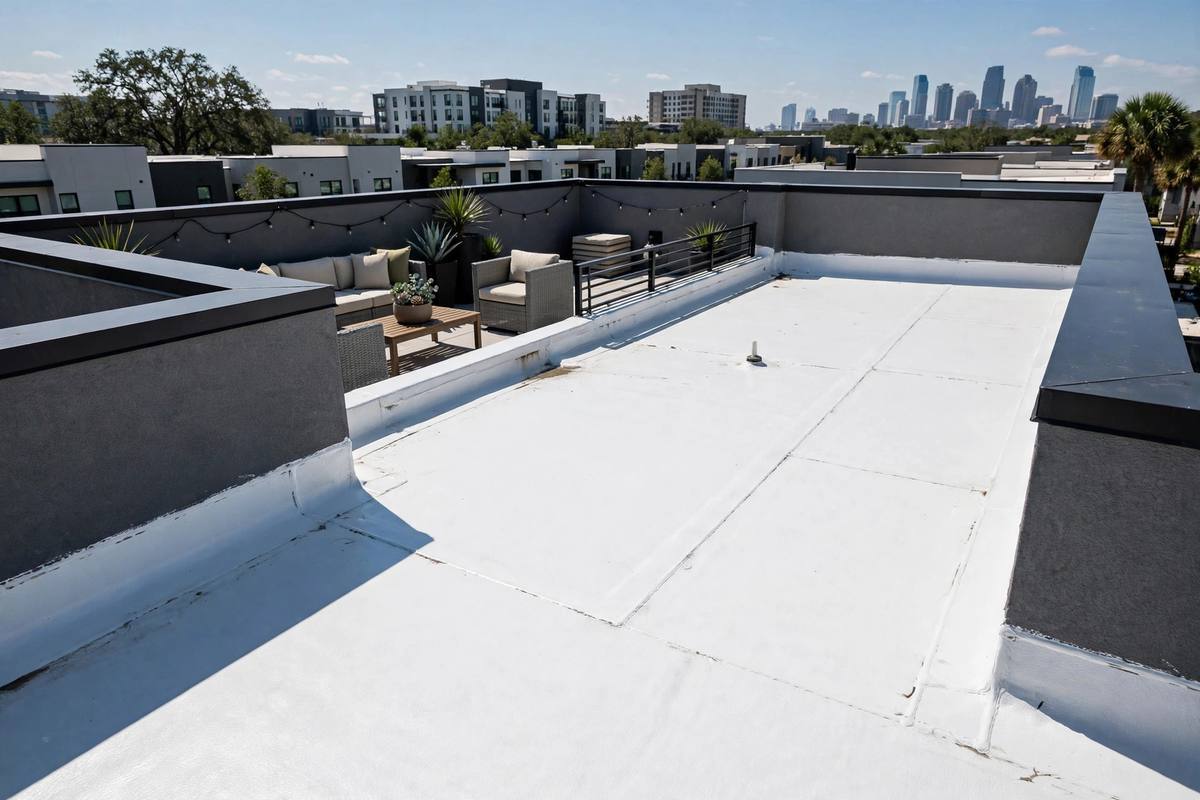
Flat is the Houston roof nobody sees until it leaks. Townhomes in Midtown and EaDo, bungalow additions in the Heights and Montrose, and offices and warehouses across the city all carry flat and low-slope membranes, and the failures are the same everywhere: ponding, seams, drains, and parapets. Flat roofing in Houston means choosing the membrane for the roof, not for the brochure. Start with a roof inspection and a written scope.
Useful updates and clear arrival timing.
Review the approach and price before deciding.
Equipped vehicles and respectful cleanup.
Neighbors serving neighbors with follow-through.
A flat roof is a system: membrane, insulation, drainage, flashing, and parapets. Here is what is part of the job.
The flat roof Houston builds most. 60-mil TPO, heat-welded seams, and white membrane that reflects summer sun. See the TPO page for the detail.
A single-ply membrane for roofs where chemical resistance and welded seams matter. The choice is made per roof.
A two-ply cap sheet, the flat roof on Heights bungalow additions and older townhome sections. See the modified bitumen page for the detail.
Layers of felt and asphalt, the older flat system still found on commercial buildings and older townhomes.
A rubber membrane for flat roofs where it fits. See the EPDM page for the detail.
Interior drains, scuppers, and tapered insulation are part of every flat scope. Standing water is what kills a flat membrane.
Tell us the building, the membrane, and what the roof is doing. We will talk through the next step and what an inspection covers.
Flat roofing in Houston is TPO, PVC, modified bitumen, and built-up membranes on townhomes, apartments, and commercial buildings, plus the flat sections on bungalow and ranch additions across the inner loop. The roof is never truly flat. It needs slope, drains, and seams that hold.
The cohort is the story. The 1993 to 2008 townhome wave in Midtown is now 18 to 33 years old, and its flat membranes are squarely in the delamination and blister zone, accelerated by rooftop temperatures above 160 degrees in summer. The same is true of EaDo townhomes and Downtown fringe townhomes. A flat roof that ponds is a flat roof that fails, and the fix is tapered insulation, not another layer over the pond.
Pricing is labelled by scope, every time. Angi Houston puts a flat roof at $2.50 to $6 per sq ft for labour, with a 1,000 sq ft flat roof at $3,000 to $10,000 and most jobs at $2,575 to $6,815. Residential TPO in Houston is $5 to $8 per sq ft, commercial TPO system-only is $8 to $12, and all-in commercial tear-off is $14 to $20. These are published market ranges, not this business's prices. Your price depends on the membrane, the deck, and the drainage.

We walk the membrane, check seams, drains, scuppers, and parapets, and photograph what we find. You get a written scope with the membrane named.
TPO, PVC, modified bitumen, or built-up, chosen for the roof, the slope, and the use. The membrane is named before any price is discussed.
A re-roof inside the city needs a City of Houston permit. The permit is part of the written scope.
Tear-off to the deck where the deck or insulation has failed, or a recover where the existing system can carry it. The choice is made on what the inspection shows.
We walk the roof with you and hand over the photos of the membrane, drains, and flashing details for your records.
Heat-welds TPO and PVC seams so the membrane is one continuous sheet.
Checks the deck and insulation for hidden moisture before new material goes on.
Takes a small core sample so the layers, insulation, and deck can be seen, not guessed at.
Checks that interior drains and scuppers can move the water Houston rain delivers.
Keep membrane courses straight and cut clean edges at parapets and penetrations.
Picks up fasteners and debris from the roof and the ground below.
Safe access and staging across large flat roof areas.
Seals flashing joints and penetrations as part of the work.
Every cut, curb, and flashing bend is measured to the roof in front of us.
Photos of the membrane, drains, and finished roof go into your file.
The 1990s membrane was delaminating and the deck beneath it was soft. We tore off to the deck, replaced the soft sheathing, and installed 60-mil TPO with tapered insulation.
The pitched main roof was sound. The flat addition membrane ponded every time it rained. We re-sloped with tapered insulation and installed a two-ply modified bitumen cap sheet.
Water stood against the parapet wall, dissolved the asphalt seams, and leaked into the top-floor bedroom. We re-flashed the parapet and replaced the membrane at the edge.
Flat roofs are the townhome and commercial story in Houston. Midtown and EaDo townhomes, Downtown lofts, Galleria high-rises, and the flat additions on Heights and Montrose bungalows all carry membranes, and the cohort is expiring at once. The 1993 to 2008 townhome wave is 18 to 33 years old now. We scope each roof to its membrane, its drains, and its parapets. Where storm damage is involved, the roof insurance claims page explains how a claim works in Texas. Call (936) 873-7200 to talk through your flat roof.
The 1993 to 2008 townhome wave is expiring all at once. Flat membranes are in the delamination and blister zone.
New townhome flat roofs ponding within years, and legacy bungalows rotting from inside. Two cohorts, failing differently.
High-rise flat membranes and parapet ponding, where the membrane age and the residential conversion age are different numbers.
High-rise flat membranes and townhome rooftops, where the condo declaration decides who owns the roof.
The two-roof house: a pitched main roof and a flat addition membrane, often under historic district review.
the failure that kills flat membranes. Drains, scuppers, and tapered insulation are part of every scope.
flat townhome sections run above 160 degrees in summer. UV and thermal shock blister membranes.
A 1990s flat section over the garage, blistering and delaminating, with a soft deck beneath it.
We tore off to the deck, replaced the soft sheathing, and installed 60-mil TPO with tapered insulation. The ponding stopped.
Maintenance: Check the building's own HOA, not a neighbourhood HOA. Midtown has dozens of project-level HOAs.
A flat addition that ponded every time it rained, with a membrane past its life.
We re-sloped with tapered insulation and installed a two-ply modified bitumen cap sheet.
Maintenance: Clear the addition's drains and scuppers each autumn. Ponding is what kills a flat membrane.
Water standing against the parapet wall, dissolving asphalt seams and leaking into the top-floor bedroom.
We re-flashed the parapet and replaced the membrane at the edge. The leak stopped.
Maintenance: Walk the parapets after any high wind. Coping and flashing are the first things wind works on.
Flat roof problems in Houston trace back to ponding, seams, drains, and parapets. Here is what we fix.
Standing water dissolves seams, rots decks, and adds weight a flat roof was not built to carry. We check drains, scuppers, and slope, and re-slope with tapered insulation where the roof has true zero-slope areas.
Rooftop temperatures above 160 degrees in summer blister flat membranes. We inspect, core-sample where needed, and say plainly whether repair or replacement is the honest answer.
Water standing against perimeter walls dissolves asphalt seams and leaks into top-floor bedrooms. We re-flash parapets and replace the membrane at the edge.
Townhome flat decks and bungalow additions are often skipped in a pitched-roof scope. We inspect the flat section with the pitched roof, because it is the same roof system.
Our crews work on Houston flat roofs every week, from Midtown townhomes to Downtown lofts to Galleria high-rises. Every job is photographed at the membrane, drain, and flashing stages, and the permit inspection is part of the job. That is what a building owner can actually check: the photos, the permit, and the written scope.

“I hired Thomas Family Roofing for a flat roof repair after hearing good things from friends and reading strong reviews. The whole experience was smooth and professional from start to finish. They also cleaned out the roof drains since they were clogged.”
“We contacted Thomas Family Roofing for an estimate on repairs for our metal roof in Houston. Luis came out, inspected the roof in person, and explained clearly what needed attention, including a few details about flashing and panel areas that other roofers had missed.”
“From our first call with Thomas Family Roofing, it was clear they were focused on giving us a quality new roof and making the whole roofing process easy to understand.”
Rating 4.9 out of 5 from 46 Google reviews (42 five-star, 4 four-star). A further 41 reviews are visible only as an aggregate on Google. See all reviews on Google.
TPO, PVC, modified bitumen, and built-up. The membrane is chosen for the roof, the slope, and the use, and named in the written scope before any price is discussed.
Angi Houston puts a flat roof at $2.50 to $6 per sq ft for labour, with a 1,000 sq ft flat roof at $3,000 to $10,000. Residential TPO is $5 to $8 per sq ft, commercial TPO system-only is $8 to $12, and all-in commercial tear-off is $14 to $20. These are published market ranges, not this business's prices.
Because the slope, the drains, or the scuppers cannot move the water. Houston rain finds every low spot. The fix is tapered insulation and working drainage, not another layer over the pond.
TPO lasts 15 to 25 years, with 60-mil TPO at 20 to 25 years, across published sources. Modified bitumen flat additions last 15 to 25 years, often less under ponding. Rooftop heat and ponding shorten both.
Not seeing your question? Call (936) 873-7200 and talk it through with the local team.
Ask the local team60-mil TPO is the flat roof Houston builds most. Seams, drainage, and when it fits.
View service
A rubber membrane for flat roofs where it fits. Seams, ponding, and when it is the right choice.
View serviceA two-ply cap sheet for Heights bungalow additions and older flat sections.
View service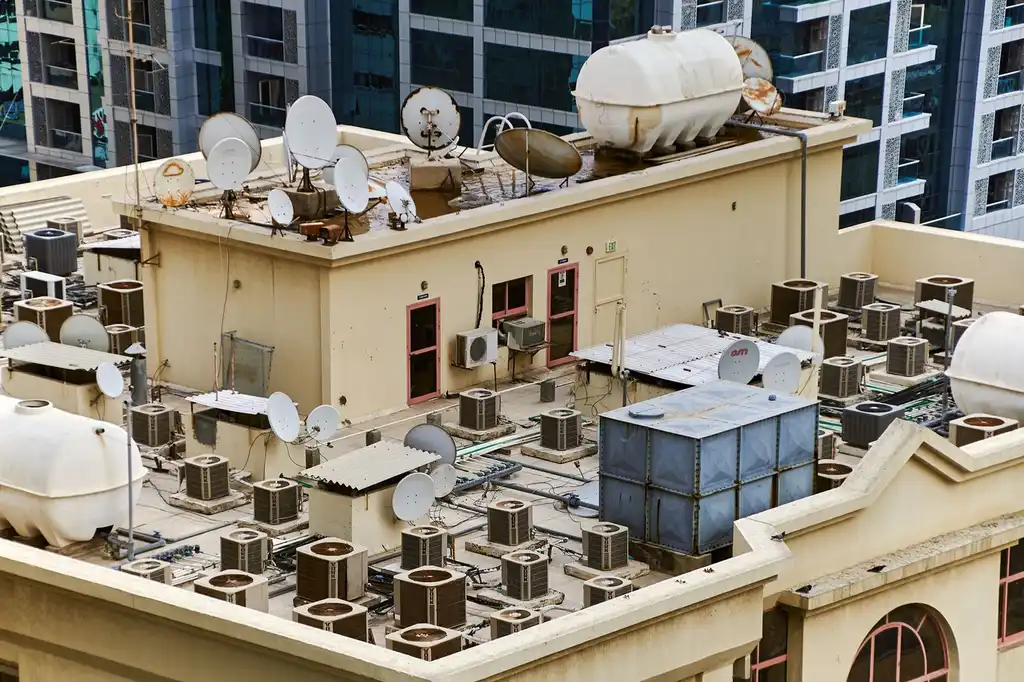
Flat systems for offices, warehouses, and retail in the Energy Corridor, Westchase, and the Galleria.
View service
Call (936) 873-7200 and tell us what you are seeing. We will talk through what is happening, what an inspection covers, and the next step. Or send a service request with the form and we will call you back.