Clear scope before work
You see the written scope and the price before any work starts.
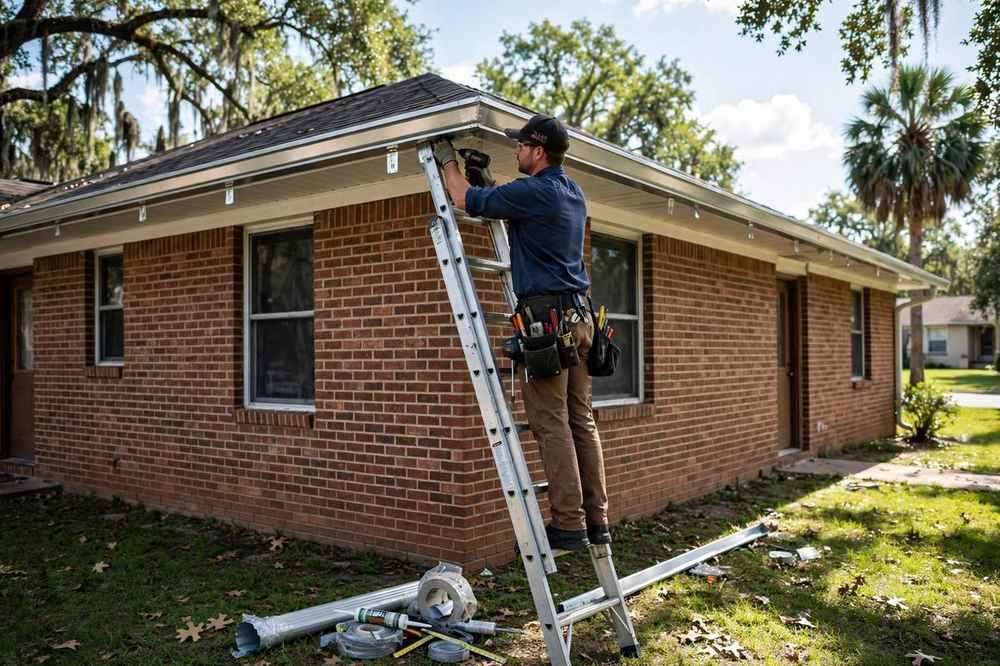
Gutter installation in Houston is part of the roof, not an accessory to it. Houston gets about 52 inches of rain a year, much of it in short, intense bursts, and a gutter system sized to the roof area is what keeps that water off the fascia, away from the slab, and out of the walls. We measure every run, form seamless gutter on site, and hang it on fascia we have checked first.
You see the written scope and the price before any work starts.
Gutters, fascia and downspouts are treated as part of the roof water system, not an add-on.
We photograph the fascia, hangers and outlets so you can see the problem yourself.
A Houston roofing company at 5507 Lyons Ave — call (936) 873-7200 and talk to the team.
Every gutter job we quote includes the parts that make the system work, not just the gutter itself. Here is what comes standard.
We form the gutter on site from coil to the exact length of each run, so a long stretch is one piece with no mid-run seams to leak or catch debris.
Hangers are screwed into the fascia on 24-inch centers. We check the wood first and replace soft fascia so the fasteners hold through storm season.
Downspouts are sized to the roof area and placed to move water 6 to 10 feet from the slab, with extensions and splash blocks so runoff never pools against the foundation.
Corners, end caps and outlets are sealed and riveted, not just caulked. Those are the spots that leak first on a cheap install, so we test every joint with running water.
We pull down the old gutter and haul it off with the scrap coil and debris. Cleanup is part of the job, not an extra.
Share what is happening with your gutters and receive a clear next step from the local team — starting with an inspection and a written scope.
Gutter installation in Houston is the process of measuring the roofline, forming seamless gutter runs on site, and fastening them to sound fascia with the correct pitch so water flows to the downspouts instead of pooling.
Houston homes take a beating from rain, and the wrong setup shows it fast. We size the runs to the roof area — not to whatever lengths the old gutters happened to be — and we check the drip edge on every job, because a gap there sends water behind the gutter instead of into it.
A roof sheds a remarkable amount of water in a Houston downpour: about 1,250 gallons from a 2,000-square-foot roof in a single inch of rain. Every drop needs somewhere to go besides your ceiling, your fascia, and your slab.
We walk the roofline, measure every run, count the corners and outlets, and check the fascia and drip edge for rot or loose boards. You get a written quote with the footage, downspout count and material options spelled out.
Aluminium in a range of colours is standard; half-round and copper are available for older homes in the Heights, Montrose and River Oaks where the architecture calls for it. We confirm downspout placement so water exits where it will not puddle.
We bring the gutter coil and roll the runs to the exact lengths measured, so there are no mid-run seams to leak. Corners, end caps and outlets are sealed and riveted.
Hidden hangers go in every 24 inches, screwed into the fascia, with the run pitched roughly a quarter inch per 10 feet toward the downspout. We check the pitch with a level before we seal anything.
We run water through the system and watch every joint, corner and outlet for drips. Then we walk the job with you, show you the downspout locations, and haul off all old gutter and scrap.
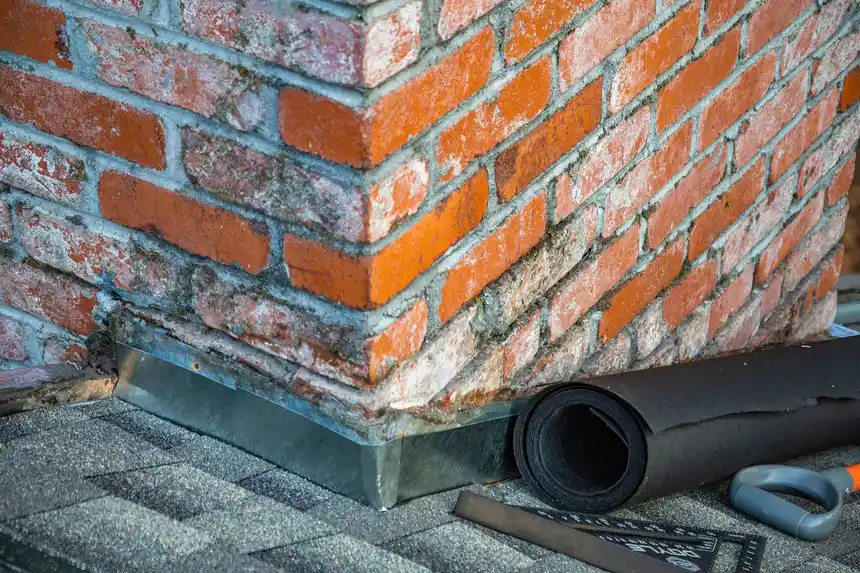
Rolls gutter coil into exact-length runs on site. This is what lets us hang a long run as one piece instead of seaming sections together every 10 feet.
The raw material we form on site, in a range of colours, plus copper for period-correct homes in River Oaks and Montrose.
Hangers set every 24 inches on center, screwed into the fascia. Consistent fastening is what keeps a run from sagging under a full load of water and debris.
Every run is pitched toward the downspout at roughly a quarter inch per 10 feet. We check it with a level before sealing anything.
Checks fascia and soffit for hidden moisture before we hang gutter. Wet wood will not hold a hanger, so we catch it before the run goes up.
Running water through the finished system is the only honest test. Every joint, corner and outlet is watched for drips before we call the job done.

We coordinate the gutter install with the roof replacement so the fascia is exposed and the drip edge is fresh. One mobilisation instead of two, a clean gutter line tight to the new shingles, and no seams to leak.
We measure the runs, check the fascia, and quote seamless aluminium with properly sized downspouts and extensions. The drainage issue is fixed on paper and in fact before closing.
Pine needles pack the valleys and the runs, and undersized downspouts cannot keep up. We add capacity, re-pitch the runs, seal the corners and replace soft fascia before re-hanging.
We size the gutter and downspouts to the roof area and tie the flat-roof scuppers into the runs so water leaves the building cleanly and the parapet stays dry.
Houston is hard on gutters. About 52 inches of rain a year falls in short, intense bursts that overwhelm undersized systems, and the clay soil across Harris County swells and shrinks with moisture, so water dumped at the slab causes foundation movement fast. Older homes in the Heights and Montrose often have shallow fascia and period details that call for half-round or copper, while newer builds are framed differently and need hangers set to match. We size downspouts to the roof area and the local rainfall, not to a generic chart.
Many 1920s and 1940s bungalows here have shallow fascia and period trim. We check the wood carefully and often recommend half-round to match the original look.
Larger homes with complex rooflines need more downspouts and careful placement. Copper and half-round are common requests to match the architecture.
Heavy pine canopy means constant needle load. Leaf guards and slightly larger downspouts keep these runs moving through fall and spring.
Long runs and few downspouts from the builder. We add capacity and re-pitch so the corners stop overflowing.
Mature landscaping means downspout placement matters. We route extensions and splash blocks so runoff clears the slab without flooding the beds.
Short, heavy downpours overwhelm undersized downspouts. We size capacity to the roof area and local rainfall so the system keeps up instead of overflowing at the corners.
A 1950s ranch had sectional gutter with seams every 10 feet, three hangers pulled loose, and water dumping at the slab. The fascia behind the worst run was soft and the soffit showed water stains.
We replaced two fascia boards, formed seamless aluminium on site, and set hangers every 24 inches with a quarter-inch-per-10-foot pitch. Downspouts with extensions now move water well clear of the slab.
Keep it working: Clear the runs twice a year and check the downspout outlets after heavy storms. With the new pitch, most debris flushes through instead of settling.
A builder-grade two-story had two undersized downspouts for a large roof area. Every heavy rain, the corners overflowed and water ran down the wall, staining the brick and soaking the beds.
We added two downspouts, re-pitched the long runs, and sealed the corners. The system now handles a hard Houston rain without overflow, and the wall stays dry.
Keep it working: Check the new downspout outlets each spring and keep the leaf guards clear. The added capacity means fewer clogs reach the run itself.
A 1930s home had mismatched aluminium gutter patched in sections over the years. The look was wrong for the house and the seams leaked onto the fascia at every corner.
We formed half-round copper on site to match the original architecture, replaced the soft fascia, and hung the runs with copper hangers. The corners are sealed and tested.
Keep it working: Copper develops a patina over time and needs little beyond annual debris clearing. Check the hangers each fall and flush the downspouts after the leaves drop.
Most of the expensive damage we see in Houston started as a small gutter problem. Here are the ones we run into most and how we stop them.
Houston’s clay soil swells when wet and shrinks when dry, and that movement cracks slabs and walls. Water dumped at the foundation from short downspouts is a common cause we see. We size downspouts to the roof area and fit extensions and splash blocks to move water 6 to 10 feet away from the slab.
A sagging run holds water, and standing water is heavy. Once a hanger pulls out, the next one takes more load and the whole run peels off the house, often in the middle of a storm. We check the fascia before we hang anything and replace rotten boards.
Sectional gutter has a seam every 10 feet, and every seam is a leak waiting to happen. Water drips behind the gutter, soaks the fascia, and rots the soffit. We form seamless gutter on site so long runs have no mid-span seams.
When a run backs up, water goes over the edge and straight down the wall. That is how fascia rot and attic leaks start, and it happens fast in a Houston downpour. We size the system to the roof area and can add leaf guards on heavily treed lots in Memorial and the Heights.

We have hung gutters on everything from 1940s bungalows in the Heights to new builds in Cypress and Katy. That range matters, because a house framed 80 years ago has different fascia depth and roofline quirks than a 2020 build. A gutter is part of the roof water system: if the drip edge, fascia and downspouts are not right, the roof pays for it.

Rated 4.9 out of 5 from 46 Google reviews. The excerpts below are from our Google profile — short excerpts only, with the reviewer’s name, rating and the date Google shows.
“We contacted Thomas Family Roofing for an estimate on repairs for our metal roof in Houston. Luis came out, inspected the roof in person, and explained clearly what needed attention, including a few details about flashing and panel areas that other roofers had missed.”
Google review · Attic venting repairs, gutter installation, roof inspection · Read on Google
“I had storm damage on my roof, and after the first insurance adjuster met with another roofing company, the claim was not approved for roof repair. My niece suggested i call Johnathan, and he came out, met with a different adjuster, and helped get the roof replacement approved.”
Google review · Roof repair for storm & wind damage, gutter installation · Read on Google
“From our first call with Thomas Family Roofing, it was clear they were focused on giving us a quality new roof and making the whole roofing process easy to understand. Miguel explained the scope of the roof replacement, the materials and shingle options…”
Google review · Roof repair for storm & wind damage · Read on Google
Published Houston market figures give a sense of the range: Angi’s Houston data lists seamless gutter work averaging about $1,134 and general gutter work about $927 — two different products, so they should not be merged. Those are published market figures, not our prices. Your number depends on footage, stories and downspout count, and we quote it in writing after measuring.
Seamless aluminium is the best all-around choice for Houston. It handles the rain volume, resists rust, and holds up to Gulf humidity. For homes in River Oaks and older Heights properties, half-round copper is the period-correct option. We size downspouts to the roof area so the system keeps up in a heavy storm.
A single-story home usually takes most of a day from setup to cleanup. Two-story homes or jobs with lots of corners and downspouts can run longer. We form the gutter on site, so there is no waiting on a factory order.
Yes — every time. Gutters hung over rotten fascia pull loose in the first hard storm. We probe the fascia and drip edge during the measure, and replace soft boards before any hanger goes up.
They help with one cause of foundation movement: roof water dumped at the slab. Houston’s clay soil swells and shrinks with moisture, so moving water 6 to 10 feet from the house keeps that soil steadier. Gutters are not a foundation repair — but they stop the roof from making a foundation problem worse.
Call Thomas Family Roofing at (936) 873-7200 and describe what you are seeing — we will tell you honestly whether it needs a visit or can wait for an inspection.
Call (936) 873-7200A leak at the roof edge is often a drainage problem, not a shingle problem. When we repair a roof, we check whether overflowing gutters or failed fascia caused the damage.
Learn more
If your roof is being replaced, that is the moment to sort the gutters and fascia — the drip edge is fresh and the wood is exposed, so the whole water system can be set up right.
Learn more
Our roof inspection includes the gutter system, downspouts and fascia. We flag loose hangers, sagging runs and clogged outlets before they turn into rot, and you get photos of what we find.
Learn more
Call (936) 873-7200 and tell us what you are seeing — a sagging run, water at the slab, or a gutter that overflows every storm. We will arrange an inspection and give you a written scope before any work starts. Or send a service request through the form and we will call you back.