Focused arrival windows
Useful updates and clear arrival timing.

A ceiling stain is where water shows up, not where it gets in. Water enters at a flashing point, a nail pop or a cracked shingle, travels along the deck or a rafter, and drips through the ceiling metres away. Patching the stain never fixes the leak. We trace the entry point first, fix the source, and water-test the repair before we leave.
Useful updates and clear arrival timing.
Review the approach and price before deciding.
Equipped vehicles and respectful cleanup.
Neighbors serving neighbors with follow-through.
A leak repair is a diagnosis first and a repair second. Here is what is included.
We follow the water: attic inspection, moisture readings, and a slope-by-slope walk of the roof to find the entry point, not just the stain.
Chimneys, skylights, valleys and wall intersections are where most Houston leaks start. Flashing is repaired or replaced, not smeared with sealant.
Damaged shingles are removed, the underlayment beneath is checked, and matching shingles are installed over new underlayment.
Cracked pipe boots are one of the most common small leaks in Houston. New boots are fitted at every penetration we touch.
If water has already rotted the decking, the soft section is cut out and replaced before the roof is closed up again.
After the repair, water is run over the area to confirm the fix holds. If it leaks, we keep working until it does not.
Share what is happening and receive a clear next step from the local team.
Roof leak repair in Houston is the work of finding where water enters, fixing that detail, and proving the fix with water before the crew leaves.
Houston gives leaks plenty of chances. About 51.8 inches of rain a year, wind-driven rain in hurricane season, and spring hail that bruises shingles and cracks their fibreglass mat. The most common leak sources we find are flashing at chimneys and skylights, valleys where two slopes meet, pipe boots that have cracked in the heat, and nail pops where a fastener has worked loose.
The second Houston fact is the attic. Pre-1980 bungalows in Montrose and EaDo were built with gable vents only, well short of balanced ridge-to-soffit ventilation. Houston humidity plus poor ventilation quietly rots decking from inside the attic without any visible interior staining — until the first heavy rain finds the weak spot. A leak repair that does not look in the attic is guessing.
You call (936) 873-7200 and describe the stain, the drip, or when it appears. Rain-only leaks and always-wet stains point to different sources, and we ask which one you have.
We check the attic for water paths and stains, then walk the roof slope by slope, photographing flashing, valleys, penetrations and the ridge.
You get a written scope naming the entry point and the fix. If the decking is rotted underneath, we show you and agree it first.
Flashing, shingles, boots or decking are repaired as the scope says. Sealant alone is not a repair for a failed flashing detail.
Water is run over the repaired area to confirm it holds, the yard is swept, and we walk the finished work with you.
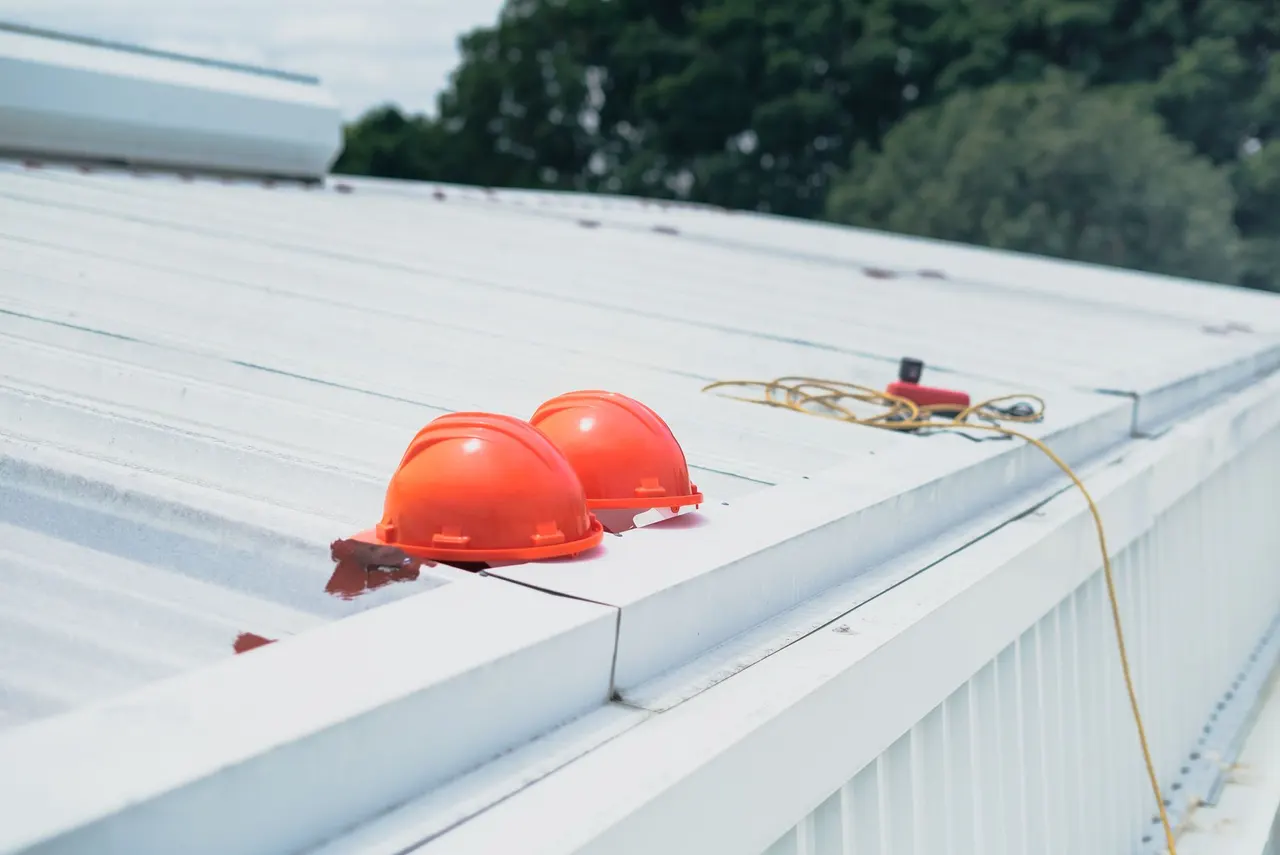
Measures water content in decking and insulation, so we can follow a leak's path through the attic even where there is no stain yet.
The attic shows the water's path: stains on rafters, wet insulation, and daylight at penetrations. We look inside before we open the roof.
Step flashing woven into the shingles and counter-flashing sealed into the masonry, replacing rusted or lifted flashing at chimneys and walls.
Valley flashing repaired or replaced where two slopes meet, because valleys carry the most water on the whole roof.
New pipe boots at every penetration we touch, fitted to the pipe and sealed, not smeared over a cracked boot.
New underlayment under any repaired section, so a patched shingle is not sitting on failed felt.
Removes damaged shingles cleanly, so repairs blend in and do not disturb the surrounding roof.
Fasteners driven to the depth the shingle maker specifies, flush and straight, so the repair holds in wind.
The yard is swept twice for nails before we leave.
Water run over the repaired area after the fix, to prove the leak is stopped before the crew leaves.
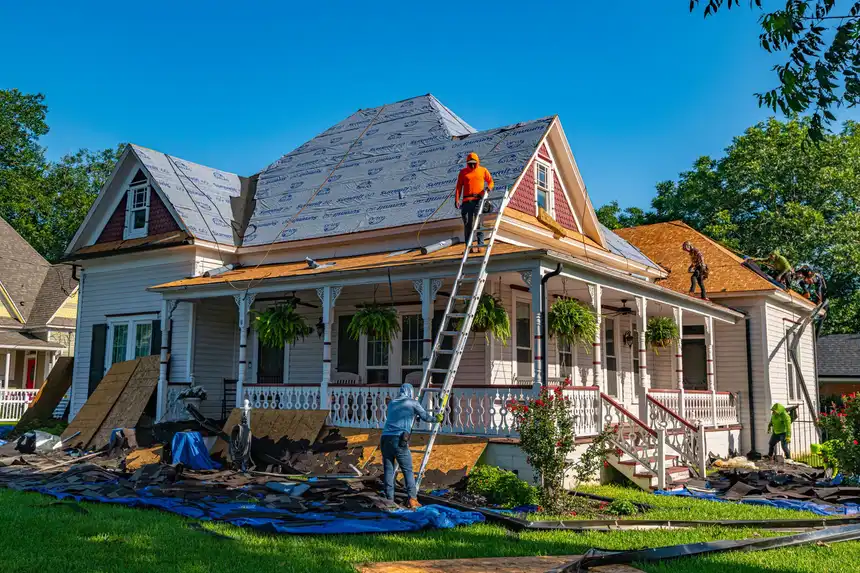
A stain means water is already inside the attic. We trace the entry point and fix the source before the decking rots further.
A returning stain means the first patch missed the source. We trace uphill from the stain and check flashing, valleys and penetrations.
Daylight at a penetration or along the ridge means the roof covering has failed there. Do not wait for the next storm to find out how much water gets in.
Skylight and chimney leaks are almost always flashing failures. We rebuild the flashing detail rather than sealing over it again.
Houston's rain does not fall straight down. Wind-driven rain in hurricane season pushes water under shingle edges, into valleys and behind flashing. A leak repair here has to be built for sideways rain, not just gravity.
Bungalow rear additions with flat membranes pond water and rot their decks invisibly. The stain appears inside long after the membrane failed.
Pre-1980 bungalows with gable-only ventilation rot decking from inside the attic. The leak shows up as a stain with no obvious roof damage.
1993–2008 townhome flat sections are in the delamination zone. Ponding water finds every failed seam, and interior drains that are undersized back up in heavy rain.
New townhome flat roofs can leak within 3–5 years where ponding was never addressed, while legacy bungalows beside them rot from the attic outward.
Low-slope ranch shingles shed water slowly. Wind-driven rain under the low-slope edge is the distinctive leak here, and hail bruising is hard to see from the ground.
Coastal wind drives rain through parapet transitions and under ridge caps. A leak after a wind event usually starts at the ridge, not the field.
Parapet-hidden flat roofs pond water against perimeter walls, dissolving asphalt seams and leaking into top-floor bedrooms.
Not listed? Bellaire, West University Place, Humble and Jersey Village are separate cities, not Houston neighbourhoods, and are not listed here. Call (936) 873-7200 and we will confirm coverage for your address.
A ceiling stain near the chimney that came back after every heavy rain, patched twice with sealant by two different crews.
The flashing was rusted through. We removed it, installed new step and counter-flashing, replaced the shingles around the chimney, and water-tested the repair. The stain never returned.
Afterwards: If a leak has been sealed twice and still comes back, the flashing is the problem, not the sealant.
Water dripping from a skylight after storms, on a roof whose shingles looked fine from the ground.
The skylight flashing had lifted at one corner. We rebuilt the flashing detail around the curb and resealed the joint, then water-tested it. The shingles were never the problem.
Afterwards: Skylight leaks are flashing leaks. Replacing shingles around a skylight without rebuilding the flashing wastes the job.
Ponding water on a Midtown townhome flat section, leaking through a failed seam into the room below.
The membrane was cut back to sound material, the deck checked for rot, and a new two-ply section installed with tapered insulation so water moves to the drain.
Afterwards: Flat roofs need slope. If water stands for more than two days after rain, the deck needs re-sloping, not another patch.
Most Houston leaks trace to a short list of details. These are the ones we fix most, and how we fix them.
Flashing failures are among the most common causes of roof leaks. We remove old flashing, clean the area, and install new step and counter-flashing sealed into the masonry, then water-test it.
A skylight is a hole in the roof with a curb around it. When the flashing at the curb fails, water comes straight in. We rebuild the flashing detail, not just the sealant.
Valleys carry the most water on the roof. When valley metal rusts or shingles lift along the valley line, water runs under the field. We replace the valley metal and re-lay the shingles.
Rubber pipe boots crack in Houston heat within years. A cracked boot lets water run down the pipe into the attic. We fit new boots, sealed to the pipe.
Texas has no state roofing licence, so there is no licence number to show you. What we can show you is a real address, real Google reviews, photos of your own roof, and a written scope before any work starts.

Leaks in Houston are rarely where the stain is. The crew that traces yours should know the city's housing stock and its failure patterns.

Excerpts from our Google reviews, shown with the reviewer’s name, star rating and the date Google shows. Our full rating is 4.9 out of 5 across 46 Google reviews. See all reviews on Google.
★★★★★
We contacted Thomas Family Roofing for an estimate on repairs for our metal roof in Houston. Luis came out, inspected the roof in person, and explained clearly what needed attention, including a few details about flashing and panel areas that other roofers had missed.
★★★★★
From our first call with Thomas Family Roofing, it was clear they were focused on giving us a quality new roof and making the whole roofing process easy to understand. Miguel explained the scope of the roof replacement, the materials and shingle options...
★★★★★
I hired Thomas Family Roofing for a flat roof repair after hearing good things from friends and reading strong reviews. The whole experience was smooth and professional from start to finish. They also cleaned out the roof drains since they were clogged...
Published market ranges, not this business's prices: Angi Houston, updated 9 Jul 2026, puts the average roof repair at $1,002, with most homeowners paying $485–$1,535. Leak repairs in the same source run $360–$1,550. Your written scope will price your roof, not a table. Leak repairs in the same Angi Houston source run $360–$1,550, and flashing repairs $200–$500. Your written scope prices your roof, not a table.
Wind-driven rain is the usual answer in Houston. In a hard storm, rain is pushed sideways under shingle edges, into valleys and behind flashing that holds fine in light rain. Hurricane season runs 1 June to 30 November, and the May 2024 derecho and Hurricane Beryl both drove rain sideways across the city.
Yes, when the damage is isolated to one detail: a flashing point, a pipe boot, a valley or a small section of decking. We trace the entry point and repair the source. If leaks keep appearing in different places, the system is failing and replacement is the honest conversation — we show you the photos that make the case.
We look in the attic first. Water leaves a path on rafters and insulation, and the entry point is usually uphill from the stain. A moisture meter confirms where the deck is wet even where there is no stain yet. Then we water-test the repair, so the fix is proven before we leave.
Not seeing your question? Call the local team and ask it directly.
Ask the local team
Targeted fixes for shingles, flashing and decking, with the source found before anything is patched.
View service
A full walk of the roof and attic with photos, so you can see what is wrong before you decide anything.
View serviceTarping and temporary cover to stop active water, then a permanent repair on a written scope.
View service
ACV vs RCV, deductibles, adjuster meetings and denials, explained in plain language.
View service
Call (936) 873-7200 and tell us what you are seeing. We will arrange an inspection, show you photos of the roof, and put the scope in writing before any work starts. Phone is the only way to reach us — there is no email address published for this business.